What Are Plastics Made Of?
Plastics are polymers, which are long chains of small repeating units. Most start from crude oil or natural gas, and the tiny fragments they break into are called microplastics.
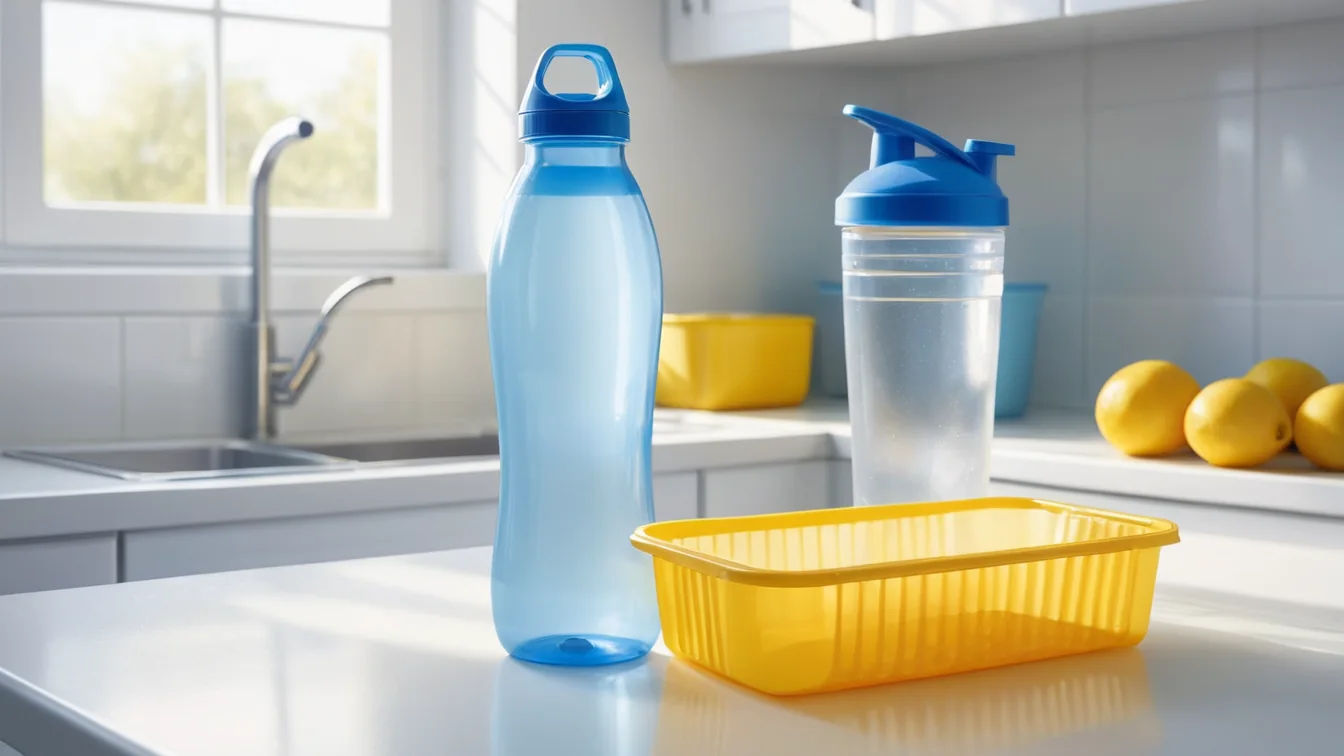
Pick up a drink bottle, a plastic cup or a ruler. They feel different, they bend in different ways and they can look very different, yet they are all called plastic. So what is inside them? The answer is a simple idea that chemists use again and again: many small pieces joined into one long chain.
The short answer: Plastics are polymers, which are long chains built from many small repeating units. Those small units are called monomers. The starting materials for most plastics are crude oil and natural gas, with a smaller share from coal.[1][2]
Monomers and polymers
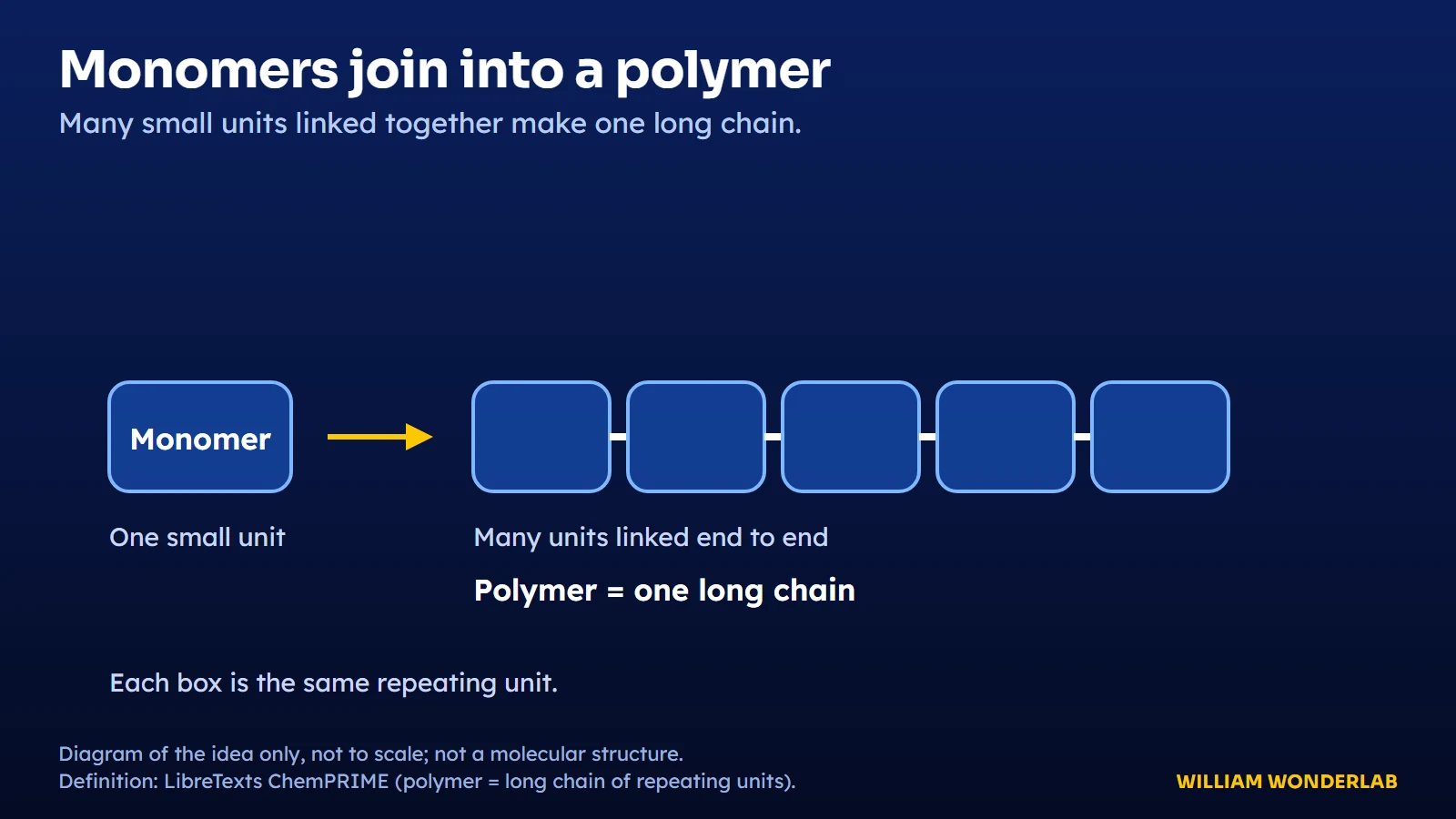
A monomer is a single small molecule. The prefix “mono” means one. A polymer is what you get when many monomers link together. The prefix “poly” means many.
One textbook describes a polymer as a substance whose molecules “can be persuaded to link up with each other in order to form a long chain of repeating units.”[1] Think of monomers as single paper clips. One clip on its own is not much use, but when you hook hundreds of them end to end, you get a long chain that can be bent, stretched and shaped.
The monomers in plastics are carbon-based molecules. The same textbook says they are “usually carbon compounds derived from petroleum.”[1]
How the chain forms
Many common plastics form by a reaction called addition polymerisation. Chemists describe the monomers in these reactions as molecules with a double bond between two carbon atoms. A LibreTexts chemistry module states that “many monomers are alkenes or other molecules with double bonds which react by addition to their unsaturated double bonds.”[3]
The same module uses ethylene, also called ethene, as its example. Ethylene monomers join together to form polyethylene, a common plastic.[3] In a simple picture, each double bond opens up so that the molecule can hook onto its neighbour. Repeat that many times and the result is a long polymer chain with the same repeating pattern all the way along.
Small units go in, and a long chain comes out.
Where the starting materials come from
Most plastics do not start from the plastic itself. They start from fuels and their by-products. The Open University, a UK public university, states: “The most important primary sources of synthetic polymers are crude oil, natural gas and, to a minor extent, coal.”[2]
Chemists take some of the carbon compounds found in these fuels and change them, step by step, into the monomers that become plastics. That is why most of the raw material for plastic is a fossil fuel.[2]
Plastic that breaks into microplastics
Plastic does not disappear when it is thrown away. It can break into smaller pieces over time. CSIRO, Australia’s national science agency, describes what happens when plastic reaches the ocean: “Plastic pollution that ends up in the ocean deteriorates and breaks down, ending up as microplastics.”[4]
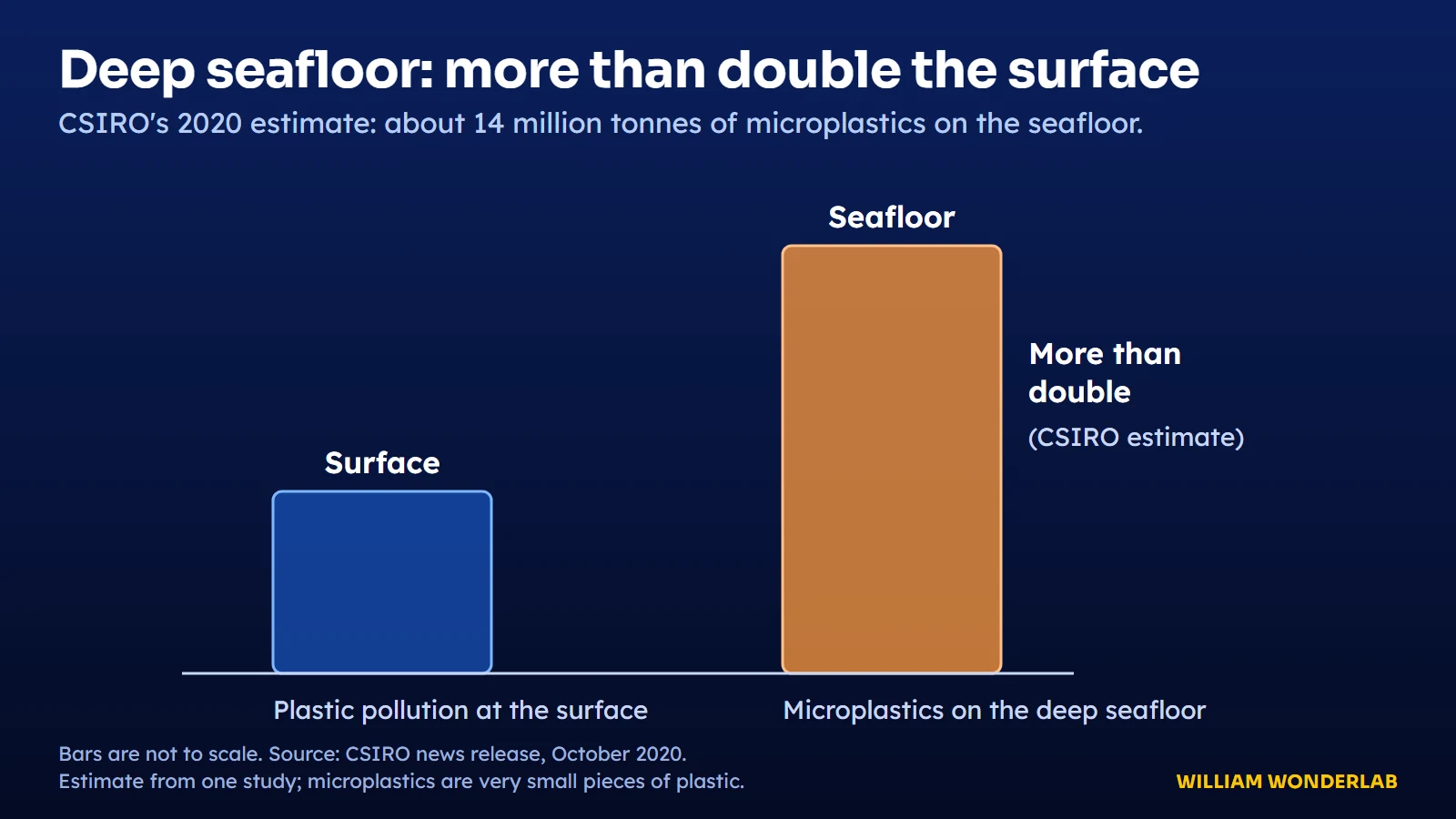
Microplastics are very small pieces of plastic. CSIRO’s 2020 study used samples from the deep seafloor off South Australia to produce a global estimate of about 14 million tonnes of microplastics on the seafloor. CSIRO said this is “more than double the amount of plastic pollution estimated to be on the ocean’s surface.”[4]
The figure is an estimate from one study, not a precise count. The diagram below compares the two amounts. It is not drawn to scale, and it shows only the relative size that CSIRO describes.
Did you know? CSIRO’s 2020 seafloor study collected seafloor samples with a robotic submarine at depths to 3,000 metres, at sites up to 380 kilometres off South Australia.[4]
Everyday examples
- A drink bottle. The clear plastic is a polymer, a long chain formed into the shape of a bottle.
- A kitchen container. The lid and the tub are both polymers. They may be different plastics, made from different monomers.
- A plastic bag. It is a thin sheet of polymer. The chain is the same idea as the one in a bottle, arranged in a different shape.
Is plastic one single substance?
Not really. People often use “plastic” as one word for one material, but it covers a family of polymers. Each polymer has its own repeating unit, so two plastics can feel very different even though both are made by linking small units into long chains.[1]
Go deeper: what “repeating unit” means
The pattern inside the chain
A repeating unit is the pattern that appears again and again along a polymer. In the LibreTexts example, a polymer is written as a long string of identical or similar units. For polyethylene, the units come from ethylene monomers.[3]
Why the source matters
Because most of the monomers come from fossil fuels, the origin of plastics connects chemistry with the fuels we use every day. Crude oil is the main source named by the Open University, with natural gas next and a smaller share from coal.[2]
Frequently asked questions
What is a polymer?
A polymer is a long chain made of many repeating units. The units are small molecules called monomers, which link together to form the chain.[1]
Are all plastics made from oil?
Most of the important raw materials for synthetic polymers are crude oil and natural gas, with a smaller share from coal.[2]
What is a monomer?
A monomer is a single small molecule. Many monomers can link together to form a polymer.[1]
What are microplastics?
Microplastics are very small pieces of plastic. CSIRO reports that plastic in the ocean breaks down and ends up as microplastics.[4]
The big idea
Long chains of small units. Plastics are polymers. Their monomers are mostly made from crude oil and natural gas, and their chains can break down into microplastics over time.
Related reading
More from William Wonderlab:
Explore more from scientists:
- CSIRO: 14 million tonnes of microplastics on sea floor (2020)
- LibreTexts: Addition Polymers
- Open University OpenLearn: Primary sources of synthetic polymers
References
[1] LibreTexts, ChemPRIME (Moore et al.), “Synthetic Macromolecules: Some Applied Organic Chemistry” (accessed 25 October 2026)
[2] Open University, OpenLearn, “Introduction to polymers: 3.1 Primary sources of synthetic polymers” (accessed 25 October 2026)
[3] LibreTexts, “Addition Polymers” (accessed 25 October 2026)
[4] CSIRO, “14 million tonnes of microplastics on seafloor” (news release, October 2020) (accessed 25 October 2026)