Why Does Bread Rise?
Bread rises because yeast makes carbon dioxide gas and the gluten network in the dough traps it. Here is how the bubbles get big enough to lift a loaf.
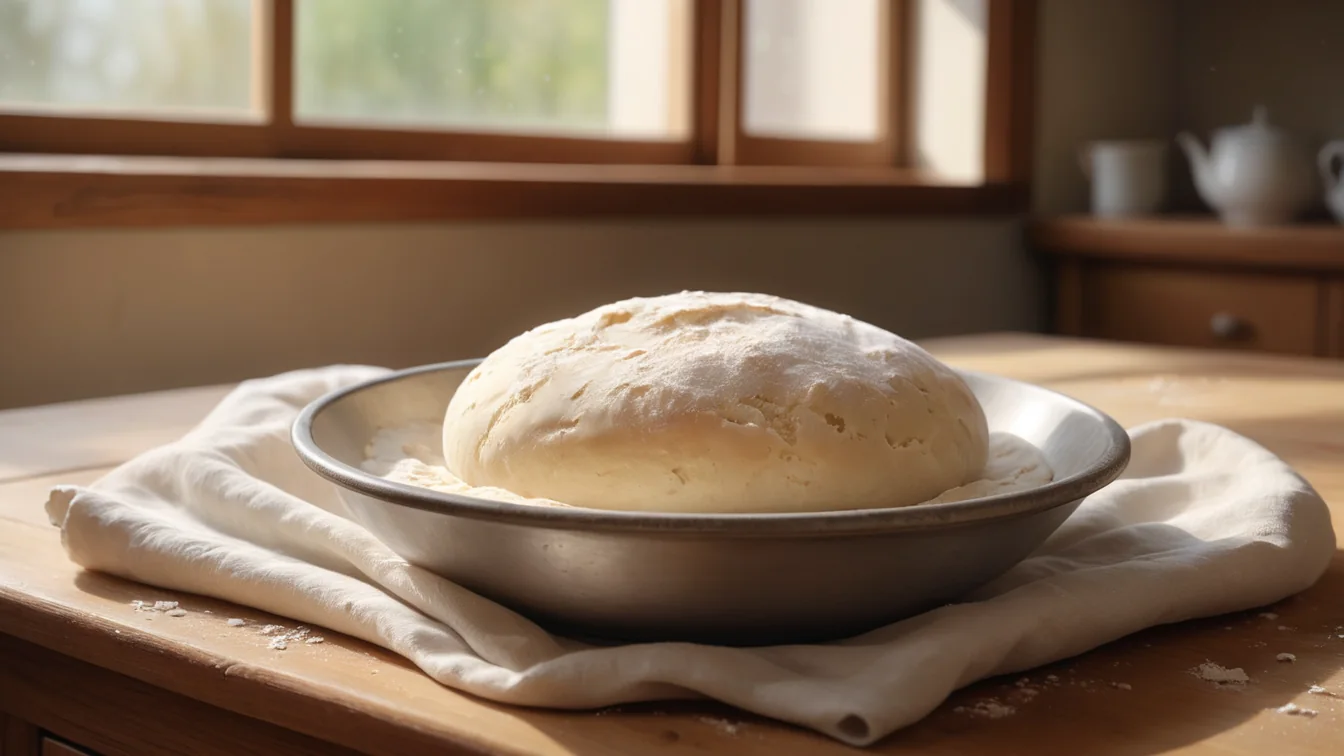
Flour and water make a sticky, heavy lump. Bake it without any help and you get a flat, dense slab. Yet a good loaf is light, soft and full of holes. Something in the dough must be pushing it up. So what makes bread rise?
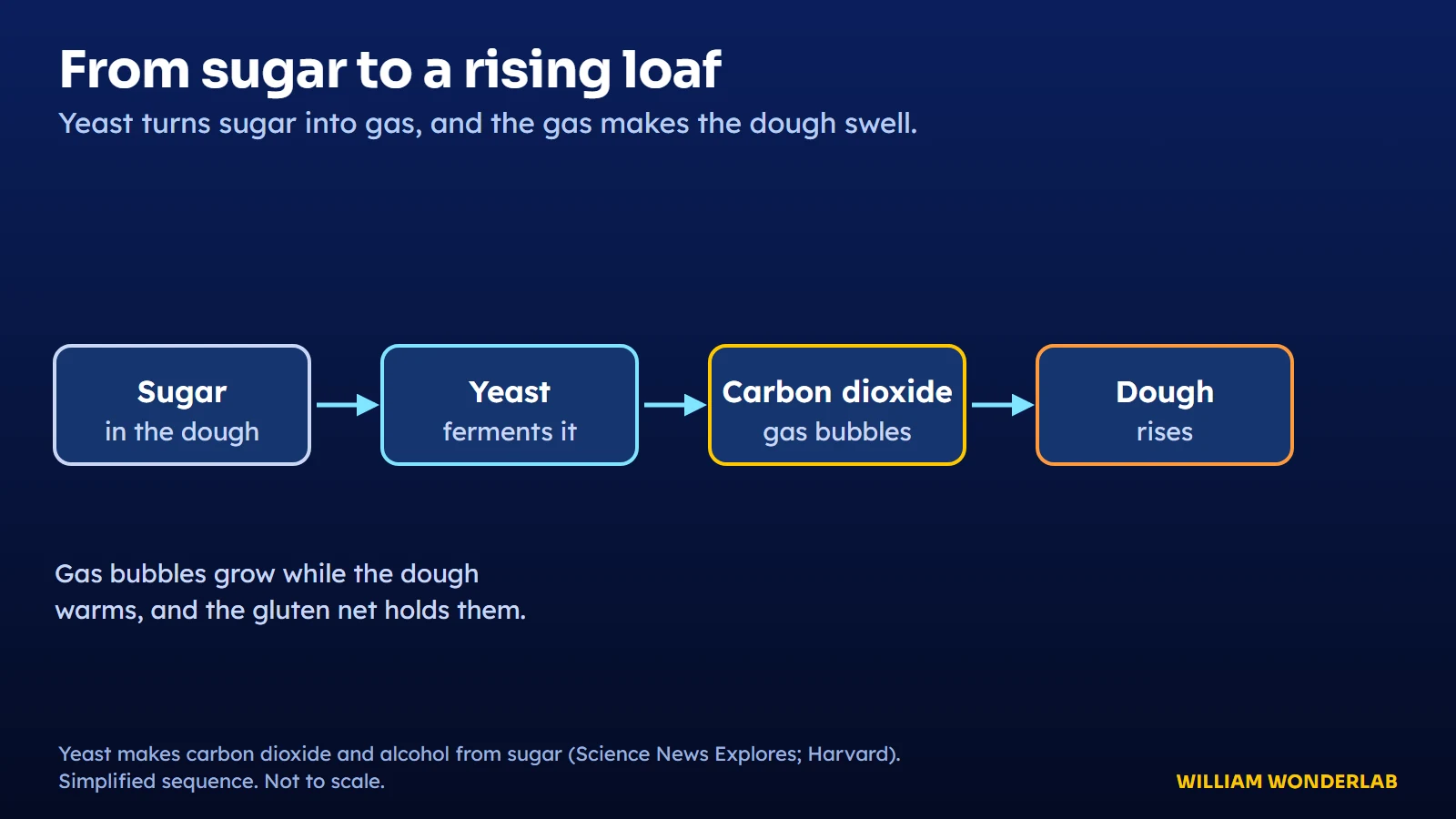
The short answer: Yeast breaks down sugar in the dough and releases carbon dioxide gas. The gas forms bubbles, and the stretchy gluten network in the dough traps them, so the dough swells like a balloon. Without that gas, bread would not rise.[1][2]
Yeast makes the gas
Yeast is a living ingredient, a one-celled fungus that feeds on sugar. Science News Explores says yeast “break down these carbohydrates in a process called fermentation, which produces carbon dioxide gas and alcohol.”[1] Carbohydrates are a group of substances that includes sugars. Fermentation is the name for the process that breaks them down.
The Harvard Science in the News article describes the same reaction: “The yeast ferments these simple sugars to form alcohol and carbon dioxide.”[2] The alcohol is made too, but the gas is what lifts the dough.
Kneading also traps a few small air bubbles in the dough. Harvard notes that these “expand when heated in the oven.”[2]
Gluten makes the balloon
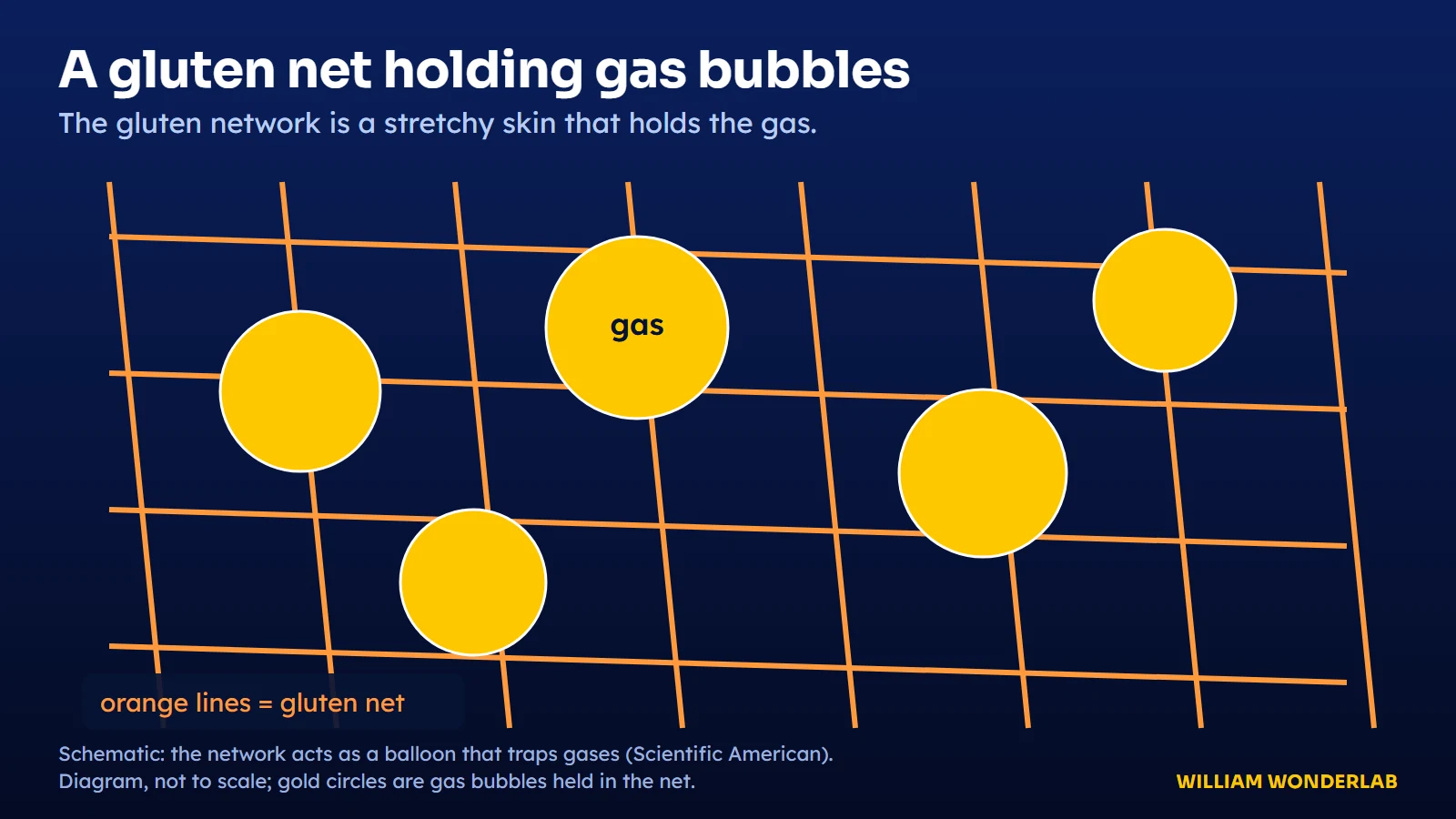
Gas needs something to hold it. Gluten is that something. Gluten forms when two flour proteins, gliadin and glutenin, are made to interact, and kneading helps this happen.[3] A Yale teaching unit says the gluten forms sheets that “behave like rubber balloons, which fill with the carbon dioxide as the bread leavens.”[3] Harvard adds that kneading “helps to stretch and organize the glutenin proteins into an elastic network.”[2]
Scientific American, reprinting an article from The Conversation, makes the same point: “The gluten network traps these gases and the dough expands like a balloon.”[4] The gluten is the skin of the balloon, and the carbon dioxide is the air that fills it.
So the dough rises as the bubbles grow and the gluten stretches around them. Science News Explores puts it simply: “the gas gets trapped in a protein matrix of gluten, and the bread puffs up.”[1]
Did you know? Bread’s soft texture comes from gas that gets trapped as the dough rises. Science Focus describes it as creating “a soft, spongy texture.”[5]
Why the dough has to be just right
The gluten has to be strong enough to hold the gas, but not so strong that the dough cannot grow. Scientific American says that “Forming a gluten network is key for getting dough to rise.”[4] If the network is too weak, “the balloon will burst and the dough will not stay risen.” If it is too strong, “the gases will not produce enough pressure to make the dough rise.”[4]
Yale’s unit notes that the sheets need to be “robust enough not to break as the carbon dioxide is formed,” and “plentiful enough to capture the gas in very small bubbles.”[3] Kneading is how bakers build that network.[2]
Try it: a yeast balloon
This is a proposed at-home activity. It shows yeast producing gas. You do not need an oven.
You need: a clean plastic drink bottle, one teaspoon of dried yeast, one teaspoon of sugar, about a quarter cup of lukewarm tap water, and a balloon.
- Predict what will happen to the balloon when the yeast starts to work.
- Put the sugar and yeast into the bottle, then add the lukewarm water and swirl gently.
- Stretch the mouth of the balloon over the top of the bottle.
- Leave the bottle somewhere out of direct sun. Check after 20 to 30 minutes and write down what you see.
What to expect: The balloon may slowly inflate as the yeast gives off carbon dioxide. The gas fills the balloon in much the same way bubbles lift dough.
Safety first: Use lukewarm tap water, not hot water. Test it on the inside of your wrist first, and if it feels hot, let it cool. Keep the bottle on a stable table, away from the edge, and do not heat it in a microwave or oven. Do not drink or taste the mixture. Wipe up spills straight away and wash your hands afterwards. An adult should help with the kettle or tap temperature.
Go deeper: fermentation, gas and the gluten network
What fermentation makes
Fermentation turns sugar into carbon dioxide and alcohol.[2] The alcohol does not stay in the loaf. Science Focus says that the oven’s heat “evaporates all the alcohol, and also kills off the yeast cells, which have now done their job.”[5]
Why the bubbles grow
Harvard says that “The expansion of the bubbles interrupts and weakens the gluten network.”[2] The network is being stretched and thinned as the bubbles grow, which is why it has to be strong enough to keep holding them.[3]
Frequently asked questions
Why does bread need yeast?
Yeast makes the carbon dioxide gas that lifts the dough. Without that gas, bread would not rise.[1]
What is gluten?
Gluten is a network of stretchy proteins that forms in dough when flour proteins interact.[3] Kneading helps build the network.[2]
Why does kneading matter?
Kneading helps stretch and organise the proteins into an elastic network that can hold gas.[2] It also introduces air bubbles that expand when heated.[2]
Does the loaf keep rising in the oven?
Harvard notes that the air bubbles already in the dough expand when heated in the oven, which is part of why the loaf keeps growing as it bakes.[2]
The big idea
Yeast makes the gas, and gluten keeps it. Yeast turns sugar into carbon dioxide. The gluten network stretches around each bubble like a balloon, so the dough rises into a light, open loaf.
Related reading
More from William Wonderlab:
Explore more from scientists:
- Scientists Say: Yeast (Science News Explores)
- Materials Science in the Kitchen: Basic Bread Revisited (Harvard Science in the News)
- The Chemistry of Baking Bread (Yale National Initiative)
Related on this site: Why Does Popcorn Pop? is another kitchen science question about gas and heat.
References
[1] Science News Explores, “Scientists Say: Yeast” (accessed 25 October 2026)
[2] Harvard University, Science in the News, Emily Gardel, “Materials Science in the Kitchen: Basic Bread Revisited” (accessed 25 October 2026)
[3] Carol P. Boynton, “The Chemistry of Baking Bread,” Unit 17.04.02, Yale National Initiative (Yale-New Haven Teachers Institute), 2017 (accessed 25 October 2026)
[4] Kristine Nolin, “Gluten’s complex chemistry contributes to delicious baked goods,” Scientific American (reprinted from The Conversation) (accessed 25 October 2026)
[5] Science Focus, “What is the yeast doing inside my bread?” (accessed 25 October 2026)