Why Do We Get Goosebumps?
Goosebumps happen when tiny muscles pull the hairs on your skin upright. The reflex is a leftover from our furry ancestors and still responds to cold and strong feelings.
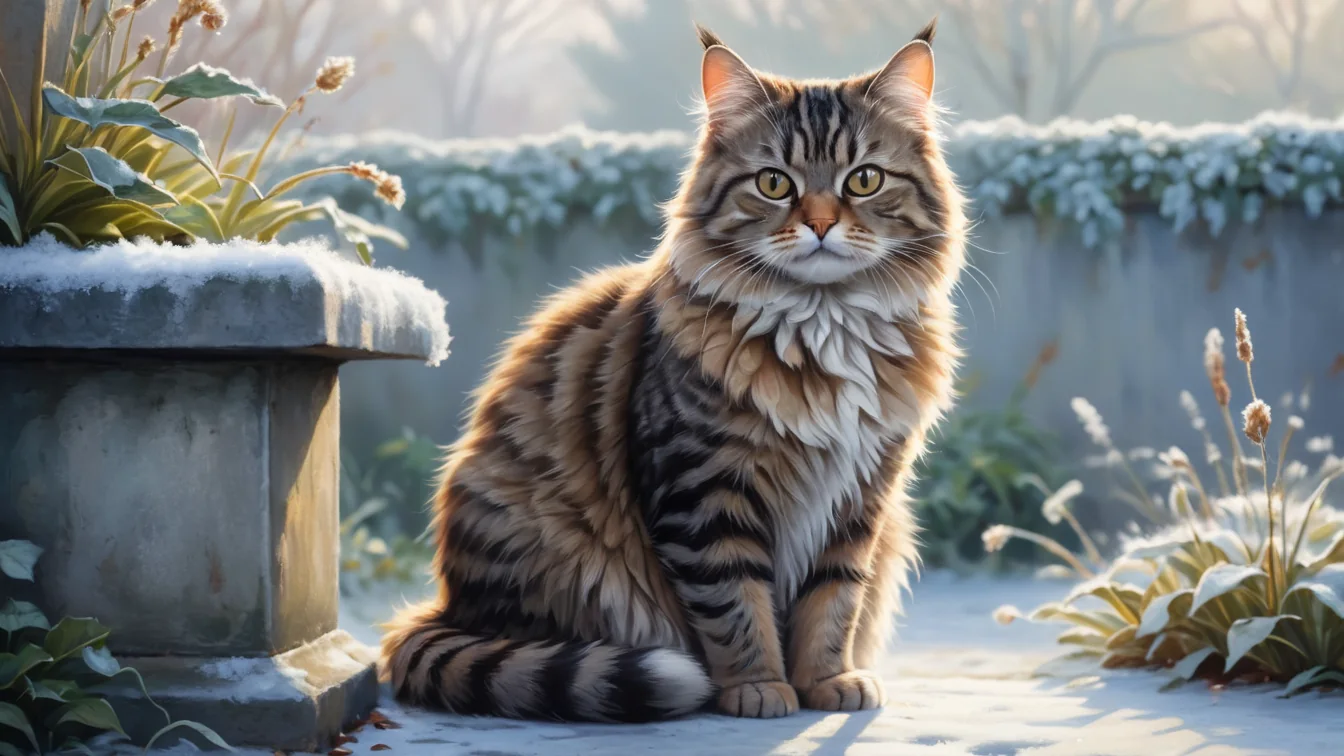
You step outside on a cold morning and, within seconds, the skin on your arms is covered in tiny bumps. Or a song swells and a shiver runs down your neck. Either way, your skin is reacting without any decision from you.
Those bumps are called goosebumps. Scientists call the reflex piloerection, which describes hair standing up.[1] Here is what is happening underneath.
The short answer: Goosebumps happen when tiny muscles attached to your hairs tighten and pull each hair upright. Nerves from the sympathetic nervous system, the part of your body that runs automatic responses, control those muscles. Cold is a common trigger, and so are strong feelings.[1][2][3]
Tiny muscles at every hair
Most of your skin has hairs, and each hair grows out of a small pocket called a follicle. Beside each follicle sits a tiny muscle. The 2020 Cell study calls these the arrector pili muscles.[1]
When the muscle contracts, it pulls the hair upright. Science News Explores puts it simply: “When these muscles contract, they make hair cells stand on end. That’s what causes goose bumps.”[2]
Hair does not grow in a few seconds. What changes is the angle of the hair. Lying down, it looks like nothing much. Standing up, it creates the bump you can see and feel.
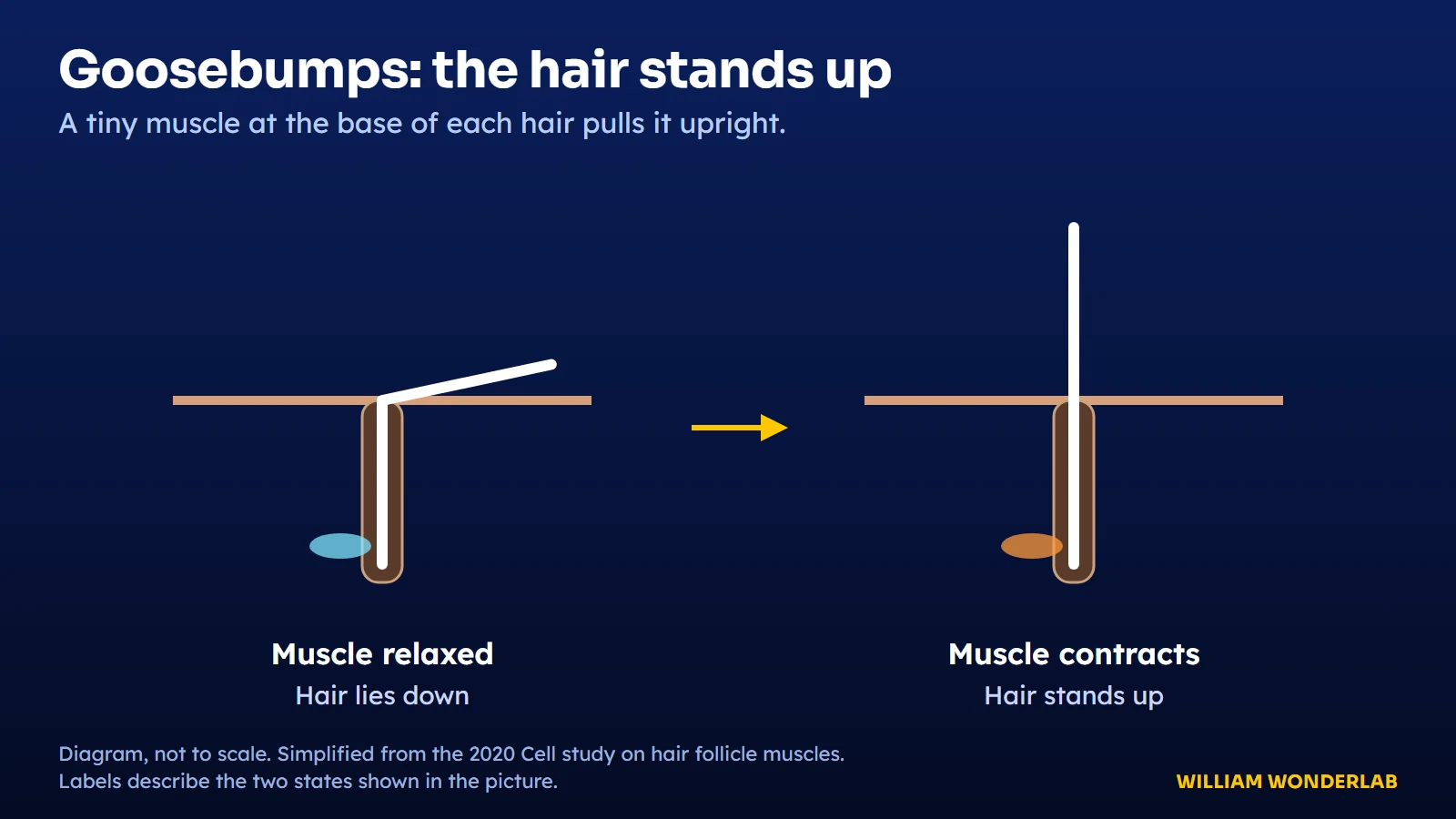
The muscles are wrapped in nerves. Science News Explores notes that the arrector pili muscles “are wrapped by sympathetic nerves.”[2] Because these nerves run without conscious control, you cannot switch goosebumps on or off at will.
Why cold brings them on
Cold is the best-known trigger. The Cell study reported that “Cold exposure results in piloerection (goosebumps),” and that “Cold exposure indeed enhanced sympathetic nerve activity.”[1] In other words, cold makes the nerves that control the muscles more active, and the muscles pull the hairs up.

Cold may also be linked to fur. Science News reported that “Getting goose bumps when it’s cold may encourage animals’ fur to grow thicker.”[4] This is a suggestion from one researcher, not a settled answer, so treat it as a clue rather than a fact.
Strong feelings too
Goosebumps are not only about temperature. A 2023 study in Frontiers in Neuroscience describes chills as “an embodied peak emotional experience induced by stimuli such as music, films, and speeches.” The same paper describes them as a peak emotional response “characterized by a feeling of cold down the spine, sometimes accompanied by goosebumps.”[3]
Scientists often call this feeling a frisson, a French word for a shiver. The feeling can come from a moving song, a powerful film scene or a speech that hits you hard. Your body reacts before you have time to think about it.
Why do we still have this reflex?
The leading idea is that goosebumps are a leftover from our furry ancestors. Popular Science describes the old explanation: “When early humans would get cold, their hairs would lift and separate slightly.”[5] The article goes on to say that the lifted hairs would trap a layer of air close to the skin as insulation.[5]
The Cell study gives the same basic picture for animals with fur. In fur-covered mammals, “The erected hair traps air to create a layer of insulation for thermoregulation.”[1] Thermoregulation is the body’s ability to keep its temperature steady.
Humans have far less hair than those animals. The Cell study notes that in humans, piloerection “has lost its role in thermoregulation,” while raising the possibility of additional functions.[1] So the reflex still happens, but it no longer does much to keep us warm.
Did you know? In the 2020 Cell study, mice showed the classic goosebumps reaction when they were exposed to cold.[1]
Go deeper: the chain from cold to bump
A simplified chain of events
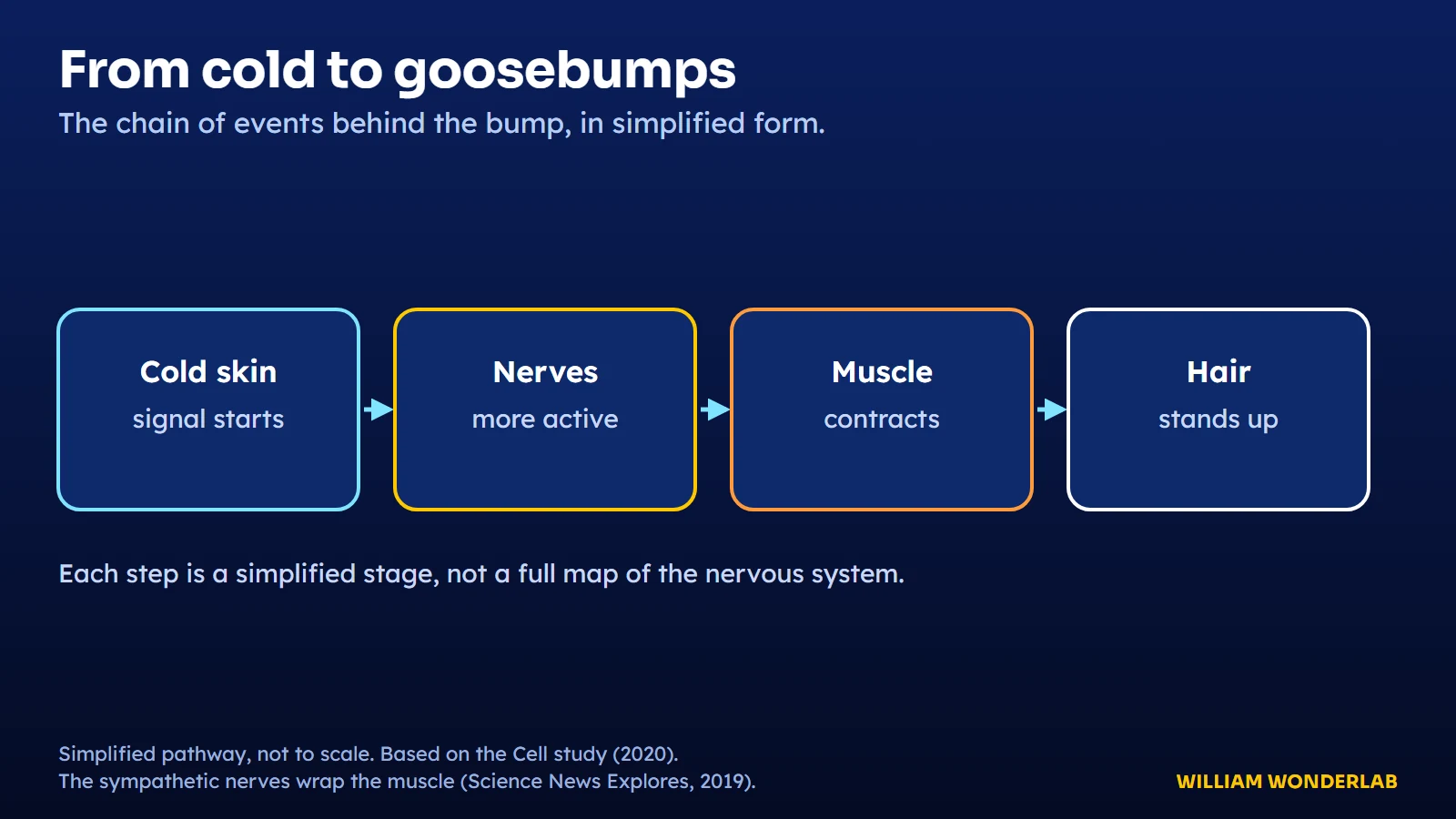
Think of the reflex as a chain. A cold signal makes the sympathetic nerves more active.[1] Those nerves wrap around the arrector pili muscle, and the muscle contracts to lift the hair.[2] The diagram below shows this chain in a simplified way.
What the new research adds
The Cell study looked at more than the bump. It describes the muscles and sympathetic nerves together as “a dual component niche” for hair follicle stem cells.[1] A niche is the local neighbourhood that helps a cell do its job. In this case, the nerves and muscles act as part of the environment that regulates the stem cells that help hair grow. The study was done in mice, so the findings are not yet a direct description of human skin.
Frequently asked questions
Do goosebumps help humans stay warm?
In fur-covered animals, raised hairs trap air as insulation. In humans, the same reflex has lost its main role in keeping warm, although the Cell authors raise the possibility of other functions.[1]
Why do I get goosebumps from music?
Researchers describe chills from music, films and speeches as a peak emotional experience.[3] Scientists are still studying exactly how the emotion and the body’s response connect.
Are goosebumps always caused by cold?
No. Cold is a common trigger, and strong emotional responses can also cause them.[3]
Do other animals get goosebumps?
The Cell study used mice, which showed the goosebumps reaction when exposed to cold.[1] The reflex is widely described in fur-covered animals, but this article only cites the studies above.
The big idea
Goosebumps are a reflex, not a choice. Tiny muscles pull hairs upright when nerves send a signal, often because of cold or a strong feeling. In our furry ancestors, that trapped warm air. In us, it is mostly a leftover.[1][2]
Related reading
More from William Wonderlab:
Explore more from scientists:
- Cell types promoting goosebumps form a niche to regulate hair follicle stem cells (Cell, 2020, via PubMed Central)
- Aesthetic chills cause an emotional drift in valence and arousal (Frontiers in Neuroscience, 2023)
References
[1] Cell, “Cell types promoting goosebumps form a niche to regulate hair follicle stem cells” (2020), via PubMed Central (accessed 25 October 2026)
[2] Science News Explores, “Goose bumps may have hairy benefits” (Tina Hesman Saey, 8 January 2019) (accessed 25 October 2026)
[3] Jain et al., “Aesthetic chills cause an emotional drift in valence and arousal”, Frontiers in Neuroscience (2023), via PubMed Central (accessed 25 October 2026)
[4] Science News, “Getting goose bumps could boost hair growth” (Tina Hesman Saey, 11 December 2018) (accessed 25 October 2026)
[5] Popular Science, “Why do we get goosebumps?” (Elaina Hancock, 22 October 2018) (accessed 25 October 2026)