How Do Frogs Breathe Through Their Skin?
Frogs take in oxygen through thin, moist skin as well as through their lungs. Skin breathing matters most when a frog rests or is underwater, and it only works while the skin stays wet.
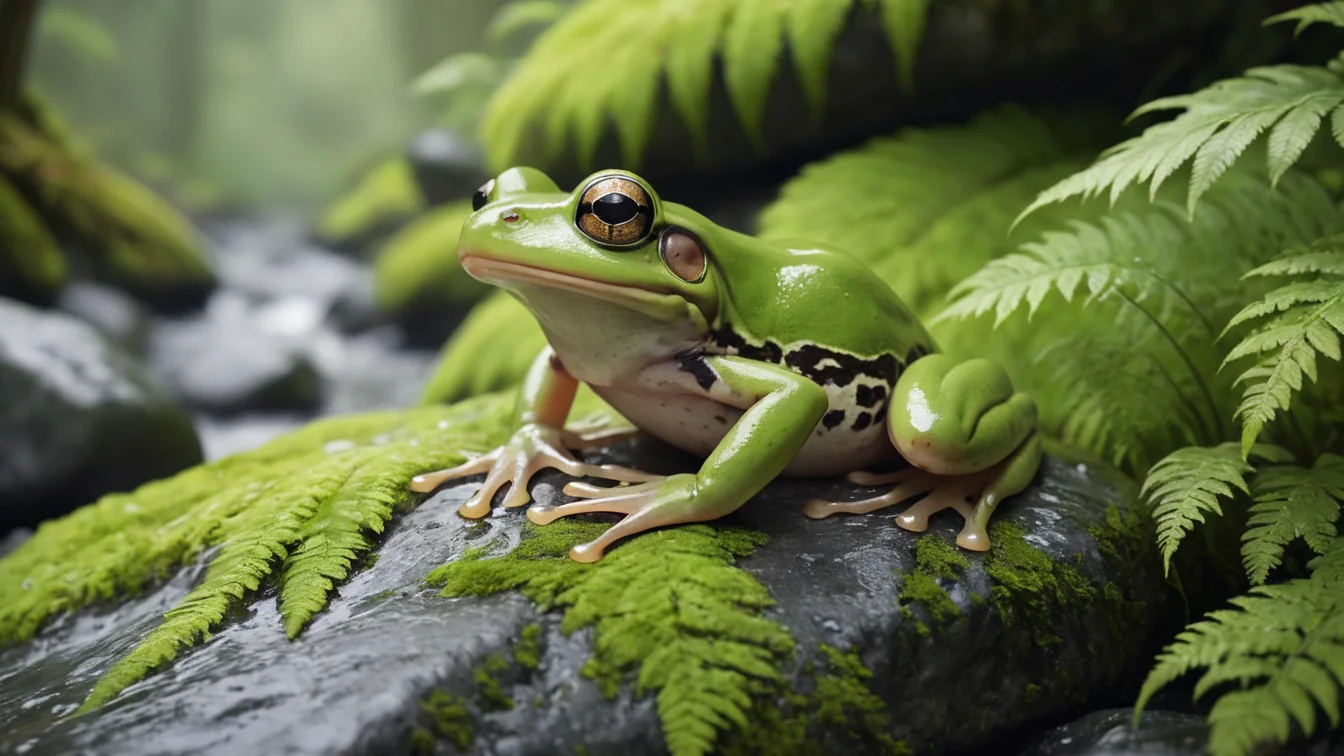
A frog can sit quietly on the bottom of a clear stream with no bubbles rising from it. It is not holding its breath until it runs out. It may be taking in oxygen through its skin.
The short answer: Adult frogs and toads take in oxygen through their lungs and through their skin. The skin is thin, moist and permeable, so oxygen from air or water can pass into the blood. Skin breathing matters most when a frog rests or is underwater, and it only works while the skin stays wet.[1][2]
A thin, wet skin
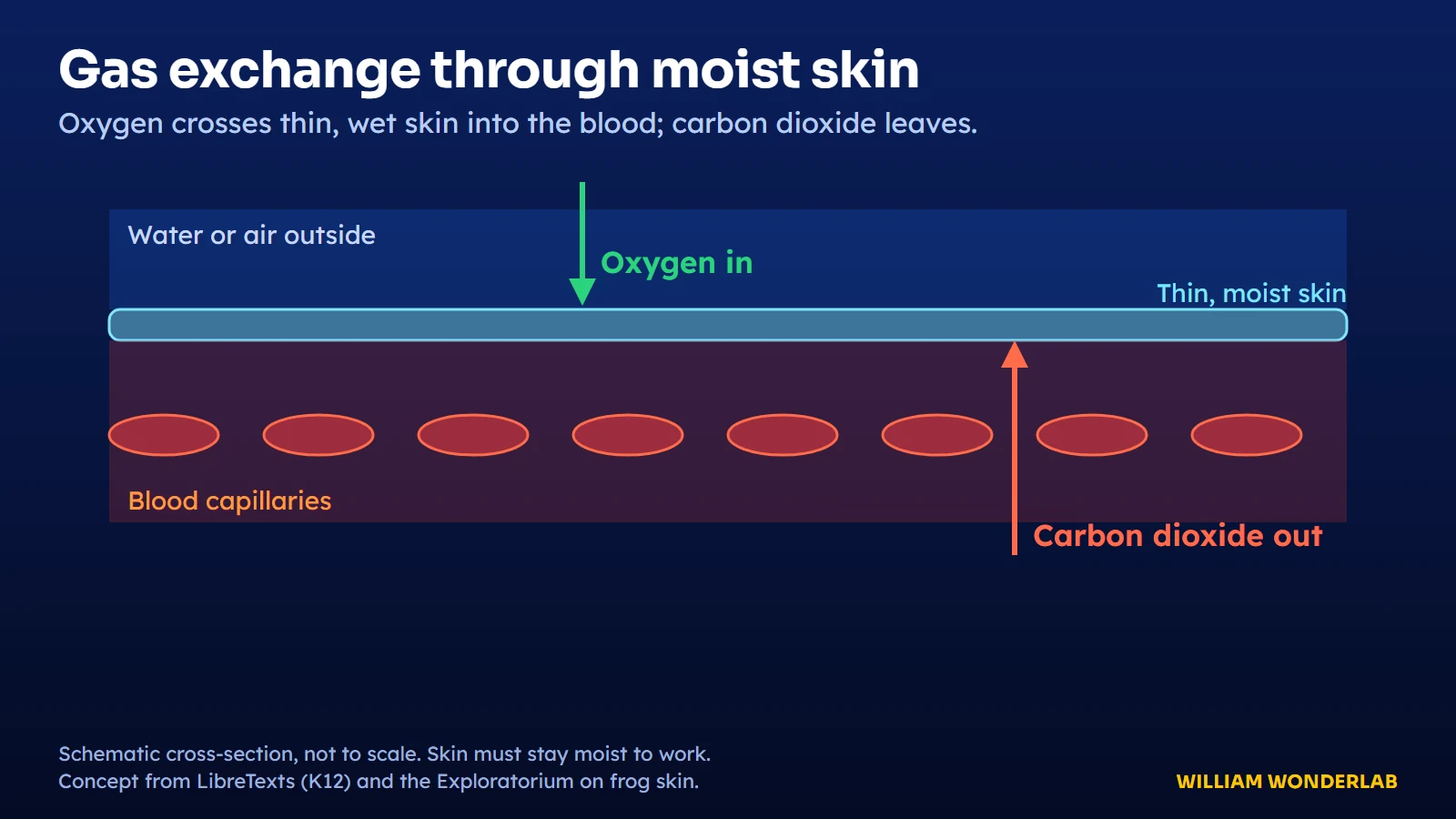
Oxygen moves into the body across a surface that is thin and wet. Frog skin fits this description: it is a moist, permeable layer covered with mucous glands, and the mucus helps keep it moist.[3][2]
Think of the skin as a thin, damp layer. The Exploratorium explains that oxygen must pass through moist skin, and that if the skin dries out, oxygen cannot pass through it easily and the frog can suffocate.[2]
Lungs and skin share the work
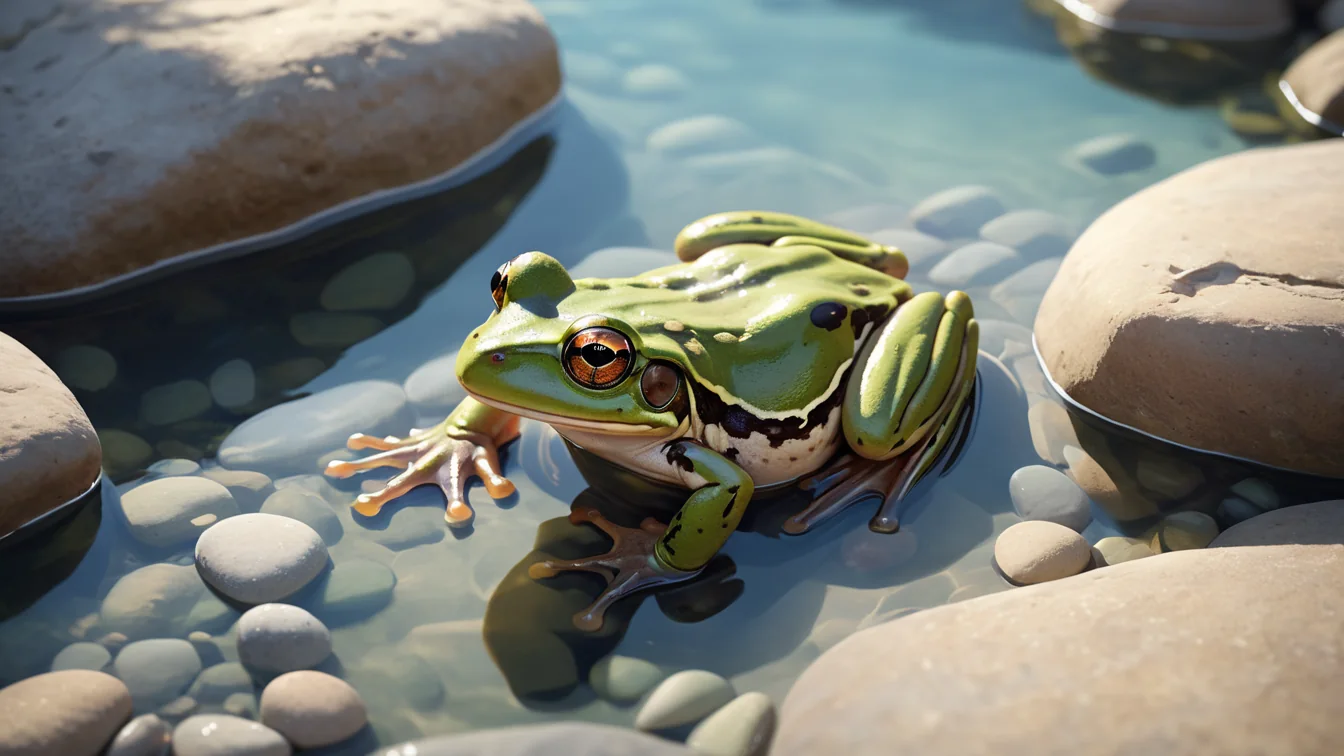
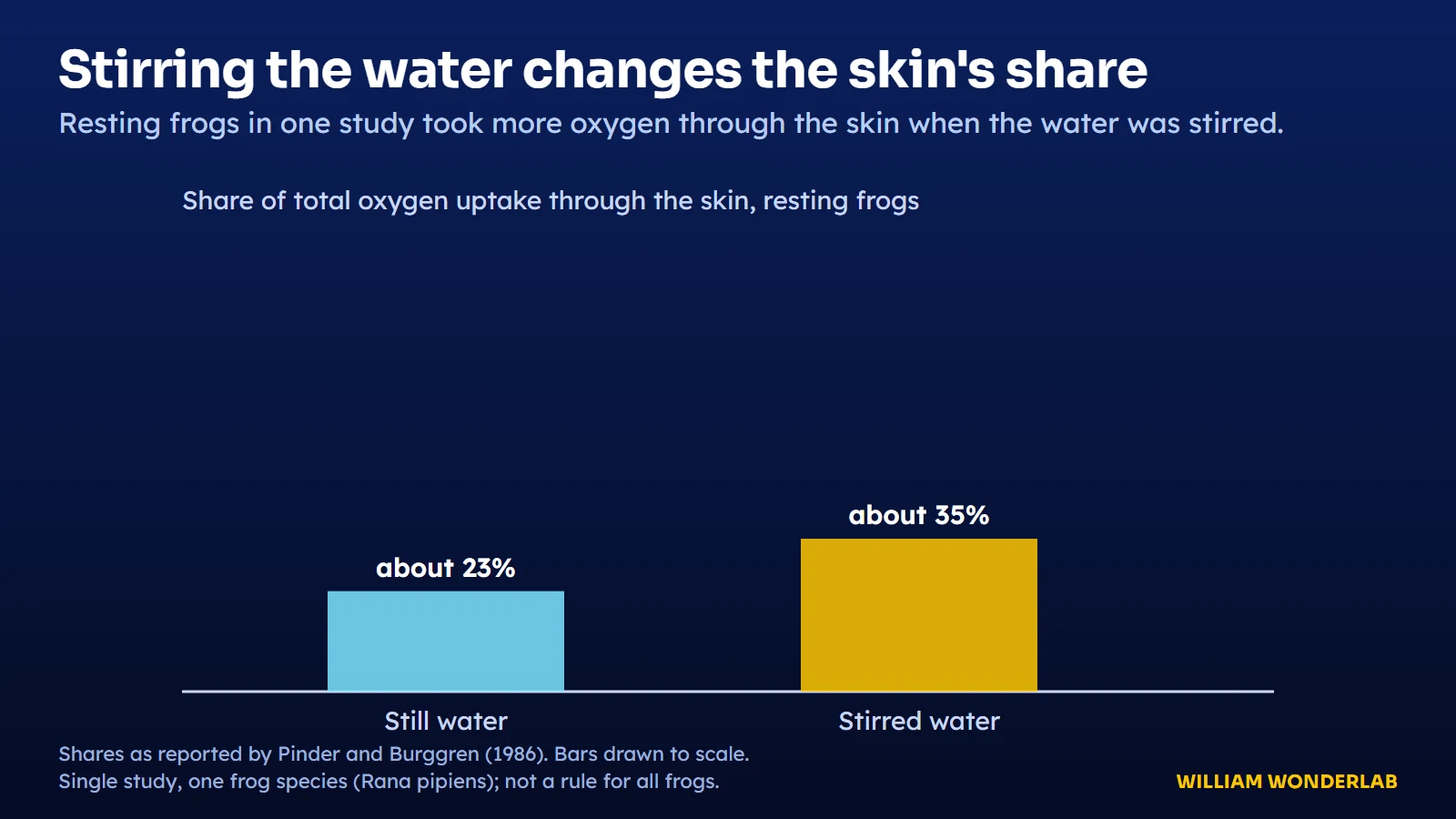
Frogs have lungs, and the skin is a second route for oxygen. In one study of resting frogs floating in still water, about 23 per cent of total oxygen uptake was through the skin.[4]
When the water was stirred, the share rose to about 35 per cent in resting animals, because stirring ventilates the skin.[4] Activity increased total oxygen uptake, and it also ventilated the skin, so skin uptake rose too.[4]
The water next to the skin
Why does stirring matter? Water next to the skin can become low in oxygen. A study of a skin-breathing salamander found that, while submerged and inactive, hypoxic boundary layers surround its skin.[5] In a study of frogs, stopping the stirring of the water reduced the uptake of sodium through the skin. The authors say these effects are consistent with depletion of sodium in a boundary layer next to the skin, but also with depletion of oxygen.[6]
So the water around a frog matters too, not only the frog’s skin.
Why frogs stay near water
Because skin must stay wet to work, frogs stay near water or in damp places so that their skin does not dry out.[1] The same thin, permeable skin that lets oxygen in also lets water out, so frogs face a trade-off. Many amphibians deal with this by living in aquatic or moist places.[7]
Toads are a useful comparison. Frogs usually stay close to water because their skin dries out easily, but toads lose moisture more slowly and can live farther from water.[2]
Try it: a frog-watching walk
This is a proposed at-home activity, to try with a grown-up. You will watch a frog or toad from a safe distance and notice its skin and breathing.
- Choose a time with a grown-up when frogs are active, such as after rain, and visit a pond, creek edge or garden with plants.
- Stand still at a safe distance and watch a frog that is resting. Look at its skin: is it shiny and moist?
- Count how many times its throat moves in one minute. Note whether it is in the water, on wet ground or on dry ground.
- Write down what you saw and whether the frog stayed close to water.
Safety first: Do not pick up, chase or handle frogs or toads. Some toads have toxic skin, and frogs can carry germs, so wash your hands after any outdoor activity. Stay on paths and keep away from deep or fast water. Go with a grown-up, and call the Poisons Information Centre on 13 11 26 if anyone touches a toad and has a reaction. Call 000 in an emergency.
Go deeper: why skin breathing has limits
The cost of wet skin
Breathing through the skin needs thin, moist surfaces, and those same surfaces lose water. A 2024 paper describes cutaneous (skin) respiration as an inefficient mode of respiration with high water costs, and says that amphibians largely avoid these costs by selecting aquatic or moist environments.[7]
Breathing more with the lungs
When frogs are less active and the water is not stirred, skin takes a larger share of oxygen uptake. When oxygen is low, the lungs take on more of the work. In one study, ventilation roughly doubled in low-oxygen conditions, and both activity and low oxygen shifted uptake towards the lungs.[4] The skin still contributes an extra amount in absolute terms.[4]
Frequently asked questions
Do frogs breathe through their skin?
Yes. Adult frogs and toads take in oxygen through their lungs and their skin, and the skin supplements the lungs.[1]
Can frogs breathe underwater through their skin?
Frogs can take in oxygen through their skin when submerged. Water movement and the stillness of the water affect how much oxygen the skin gets.[2][5][6]
Why do frogs need moist skin?
Oxygen has to pass through the skin, and the skin must stay wet for that to happen. Without moisture, a frog can suffocate.[2][3]
Do tadpoles breathe through their skin?
Tadpoles have gills and a tail, and they develop lungs as they become adults.[1]
Is skin breathing enough on its own?
In one study of one frog species, resting frogs in still water took in about 23 per cent of their oxygen through the skin, and the lungs took the rest.[4]
The big idea
Skin is a second set of breathing surface. Frogs take in oxygen through thin, moist skin as well as their lungs. The skin works best when it stays wet and the water around it keeps moving.
Related reading
More from William Wonderlab:
Explore more from scientists:
- Ventilation and partitioning of oxygen uptake in the frog Rana pipiens (Pinder and Burggren, 1986, PubMed)
- Bulk flow of the medium and cutaneous sodium uptake in frogs (Feder et al., 1993, PubMed)
- Amphibians Exhibit Extremely High Hydric Costs of Respiration (Riddell et al., 2024, PubMed)
References
[1] LibreTexts, “10.9: Frogs and Toads” (K12) (accessed 26 October 2026)
[2] Exploratorium, “Frogs: The Amazing, Adaptable Frog”, page 2 (accessed 26 October 2026)
[3] LibreTexts, “10.9: Frogs and Toads” (K12) (accessed 26 October 2026)