How Do Echidnas Find Their Food?
Echidnas open ant and termite nests with their claws and catch insects on a long sticky tongue. They also have snout sensors, but how much those sensors help in the wild is still debated.
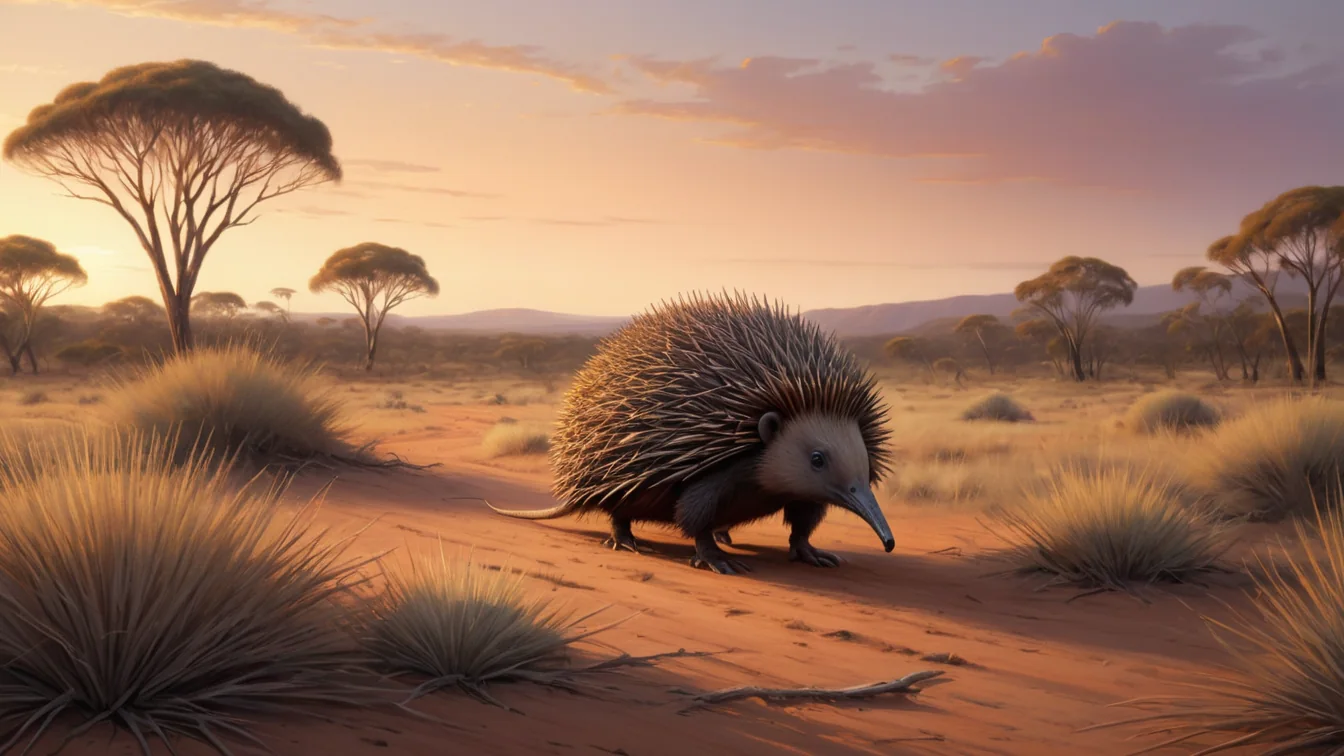
On a dry night in the Australian bush, an echidna may walk slowly through the leaf litter, stop at a mound of soil and start digging. Its prey is hidden inside. So how does an echidna find its food when the insects are out of sight?
The short answer: Echidnas get much of their food by breaking into ant and termite nests with their claws and snout, then catching the insects on a long, sticky tongue.[1][2] Lab tests show that their snout tip can sense very weak electric fields, but the natural sources of those fields are still to be determined.[3]
Nests first: claws and snout
The Australian Museum says that the short-beaked echidna breaks into ant and termite nests and catches its prey by flicking its long, sticky tongue in and out.[1] The nest is the food source, so the first step is digging.
Think of a nest as a sealed lunchbox. The echidna needs to open it before it can eat. The Australian Museum describes the echidna’s pointed snout and sharp claws as the tools it uses to break into the nests.[1]
A tongue made for insects
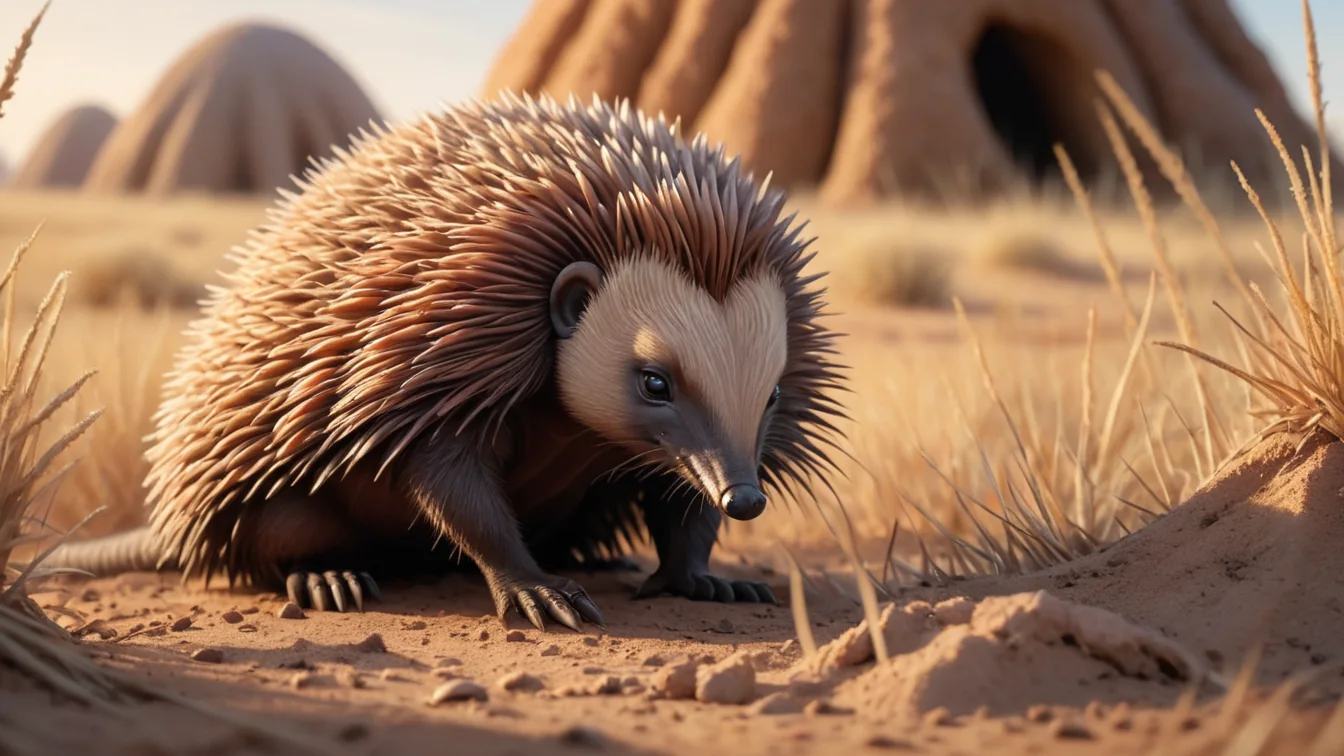
Echidnas have no teeth. The Australian Museum notes that they make up for this with long, sticky tongues.[5] The tongue does the catching, and the echidna then grinds its prey against the bottom of its mouth.[2]
Think of the tongue as a sticky strip. It shoots out, insects stick to it, and it pulls them back into the mouth.
Electric sense at the snout tip
Here is where the story gets interesting. In 1989, researchers recorded nerve signals from anaesthetised echidnas and found electroreceptors, which are sense organs that respond to electric fields. The receptors were found only at the tip of the snout. Each one had a small, separate area that it responded to.[3]
The same study found that the echidna was the first known land animal with electroreception. In a behavioural test, a trained echidna learned to detect electric fields down to 1.8 mV per cm.[3]
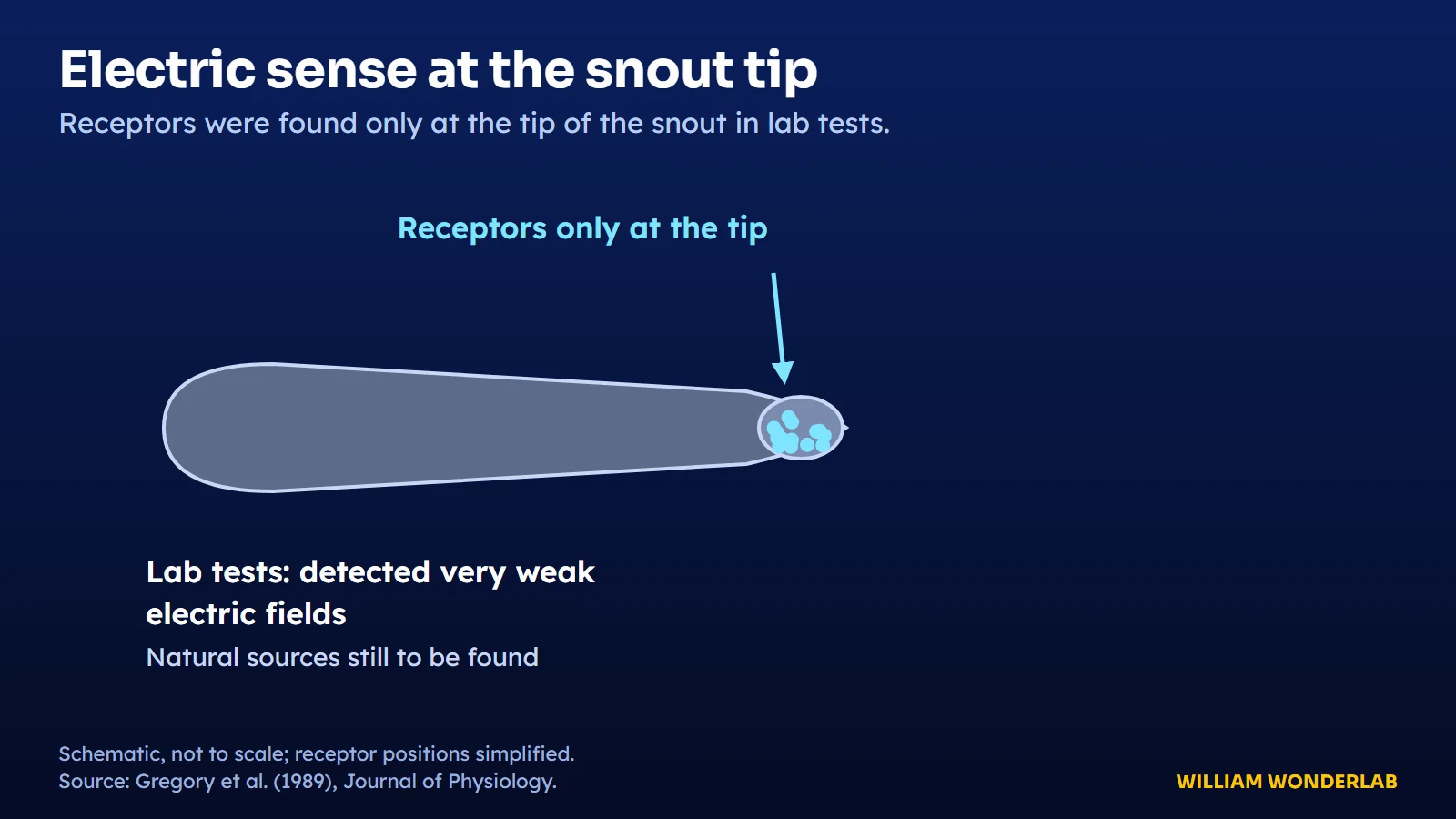
The same study noted that the natural sources of the electric fields the echidna could detect remain to be determined.[3] So the lab result is clear, but the link to finding food in the wild is still a question.
Did you know? An echidna’s electroreceptors are small, separate spots at the very tip of the snout, not spread across the snout.[3]
A debate about how much it matters
A 1999 review by J. D. Pettigrew covers electroreception in the three living monotremes, the group of egg-laying mammals that includes the platypus and echidnas. It compares monotreme electroreception with that of electric fish.[4]
A museum page takes a more hopeful view. The Natural History Museum in London says that electroreception is usually found in marine animals, and that echidnas may be the only land mammals to search for food this way.[2] Lab work shows the snout can detect very weak fields, but how much echidnas use this sense in the wild is still being worked out.
Try it: an ant watch
This is a proposed at-home activity, to try with a grown-up. You will watch how ants find food, which can help you think about how an animal might do the same.
- Find a garden path or a patch of footpath where ants are walking. Do not disturb any nest.
- Predict what will happen if you put a small crumb near the trail. Will the ants find it quickly?
- Sit a short distance away on a mat and watch for five minutes. Count the ants that find the crumb, and note how long it takes.
- Write down what you saw and whether the ants touched the crumb with their antennae before carrying it away.
Safety first: Do this with a grown-up, and sit on a mat away from the nest. Some ants can bite or sting, so stop if they come near your skin, and do not poke or squash them. Do not use chemicals, sprays or baits. Keep food for people in a sealed container, and wash your hands afterwards. If you get a bite or sting that swells or itches badly, tell a grown-up straight away and call the Poisons Information Centre on 13 11 26 for advice. If there is any trouble breathing or swelling of the face or throat, call 000 straight away.
Go deeper: how scientists test a sense
What the 1989 study did
The 1989 study recorded nerve signals from four anaesthetised animals, and it ran a behavioural test on one trained echidna.[3] A small sample like this is a strong start, but it does not show how often echidnas sense electric fields in the wild.
Why the debate matters
Pettigrew’s review takes an evolutionary view of electroreception in the three living monotremes, and it considers what can be inferred about their ancestors.[4] The 1989 study found that the natural sources of the electric fields remain to be determined.[3] So how much echidnas use this sense is still an open question.
Frequently asked questions
Do echidnas have teeth?
No. The Australian Museum says echidnas have no teeth and rely on their long, sticky tongues.[5]
What do echidnas eat?
The Australian Museum describes echidnas breaking into ant and termite nests to catch their prey.[1]
Can echidnas sense electricity?
Lab tests show that echidnas can detect very weak electric fields at the snout tip.[3]
Do echidnas use electricity to find food?
Scientists are not sure. Lab tests show the snout can detect very weak fields, but the natural sources of those fields remain to be determined.[3] A Natural History Museum page says echidnas may be the only land mammals to search for food this way.[2]
Are echidnas related to platypuses?
Yes. Both are monotremes, the egg-laying mammals, and Pettigrew’s 1999 review compares their electroreception.[4]
The big idea
Digging and a sticky tongue do the hard work. Echidnas open ant and termite nests with their claws and snout, then catch the insects on a long tongue. Their snout sensors are real, but how much they help in the wild is still an open question.
Related reading
More from William Wonderlab:
Explore more from scientists:
- Short-beaked Echidna (Australian Museum)
- Responses of electroreceptors in the snout of the echidna (Gregory et al., Journal of Physiology, 1989)
- Electroreception in monotremes (Pettigrew, Journal of Experimental Biology, 1999)
References
[1] Australian Museum, “Short-beaked Echidna” (accessed 26 October 2026)
[2] Natural History Museum, London, “Ten reasons to love echidnas” (accessed 26 October 2026)
[3] Gregory, J. E., Iggo, A., McIntyre, A. K. and Proske, U. (1989), “Responses of electroreceptors in the snout of the echidna”, Journal of Physiology (accessed 26 October 2026)
[4] Pettigrew, J. D. (1999), “Electroreception in monotremes”, Journal of Experimental Biology 202(10) (accessed 26 October 2026)
[5] Australian Museum, “Echidna research in the Mammalogy collection” (accessed 26 October 2026)