Why Do Platypuses Lay Eggs?
Platypuses lay eggs because they belong to a group of mammals called monotremes, which kept an egg-laying habit from their ancient ancestors. Here is how it works.
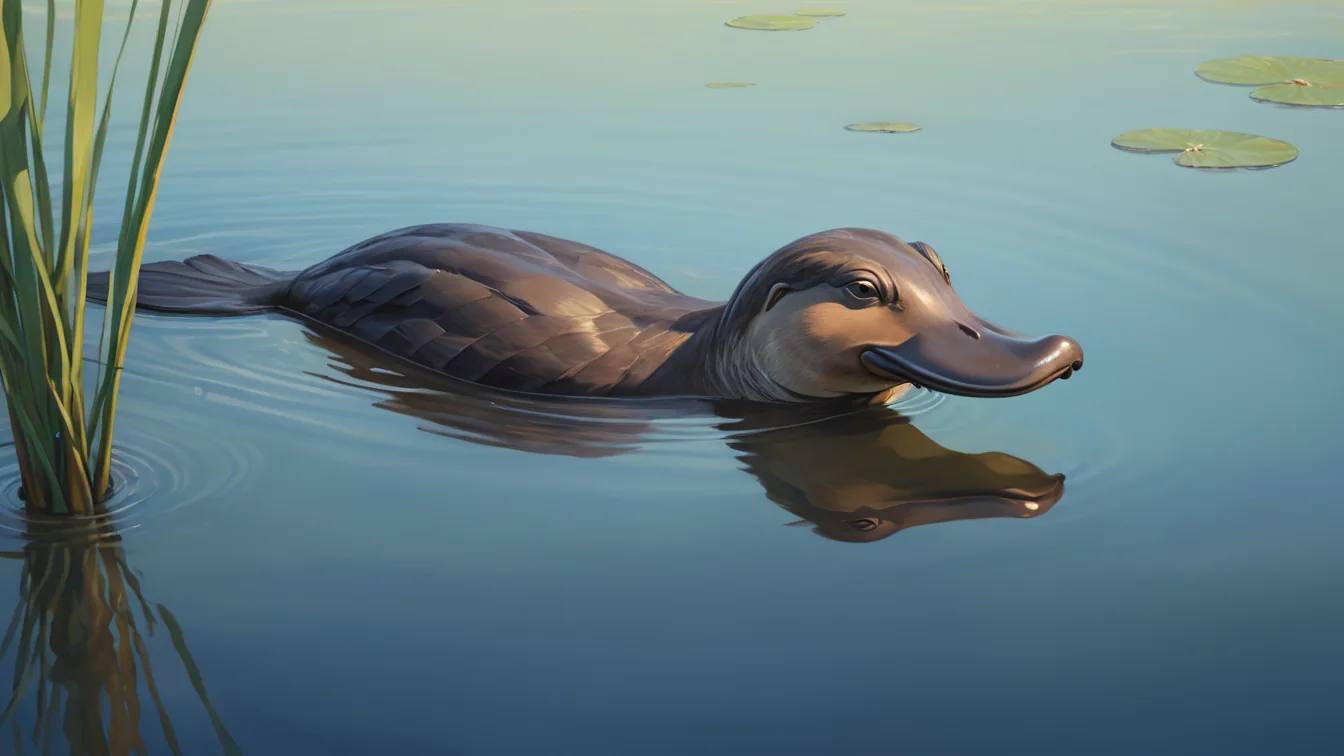
Most mammals give birth to live babies. The platypus does something different: it lays eggs. It is a mammal, though, and its young drink milk. So how can one animal do both? The answer is a story about evolution that goes back more than 160 million years.
The short answer: Platypuses lay eggs because they belong to a group of mammals called monotremes. The Australian Museum says monotremes “are different from other mammals because they lay eggs and have no teats.”[1] The monotreme line split from other mammals more than 160 million years ago, and it kept the egg-laying habit.[2][3]
What is a monotreme?
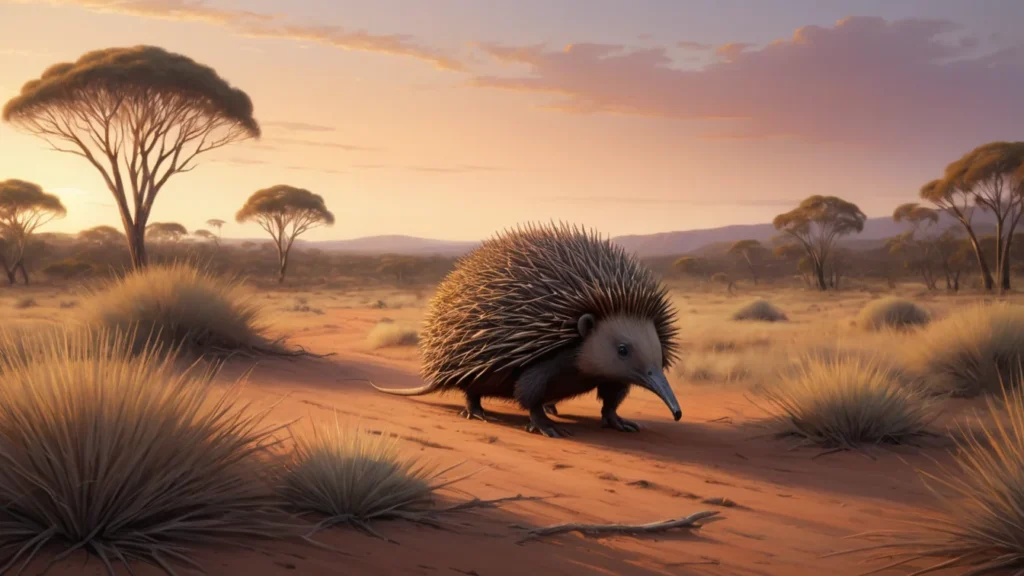
A monotreme is a mammal that lays eggs. The Australian Museum groups platypuses with echidnas: “Along with echidnas, platypus are grouped in a separate order of mammals known as monotremes.”[1]
Think of it like a family with its own traditions. Most mammal families give birth to live young. The monotremes are a small family that stayed on a different path, and they still do things the old way.
Why the egg is a clue to evolution
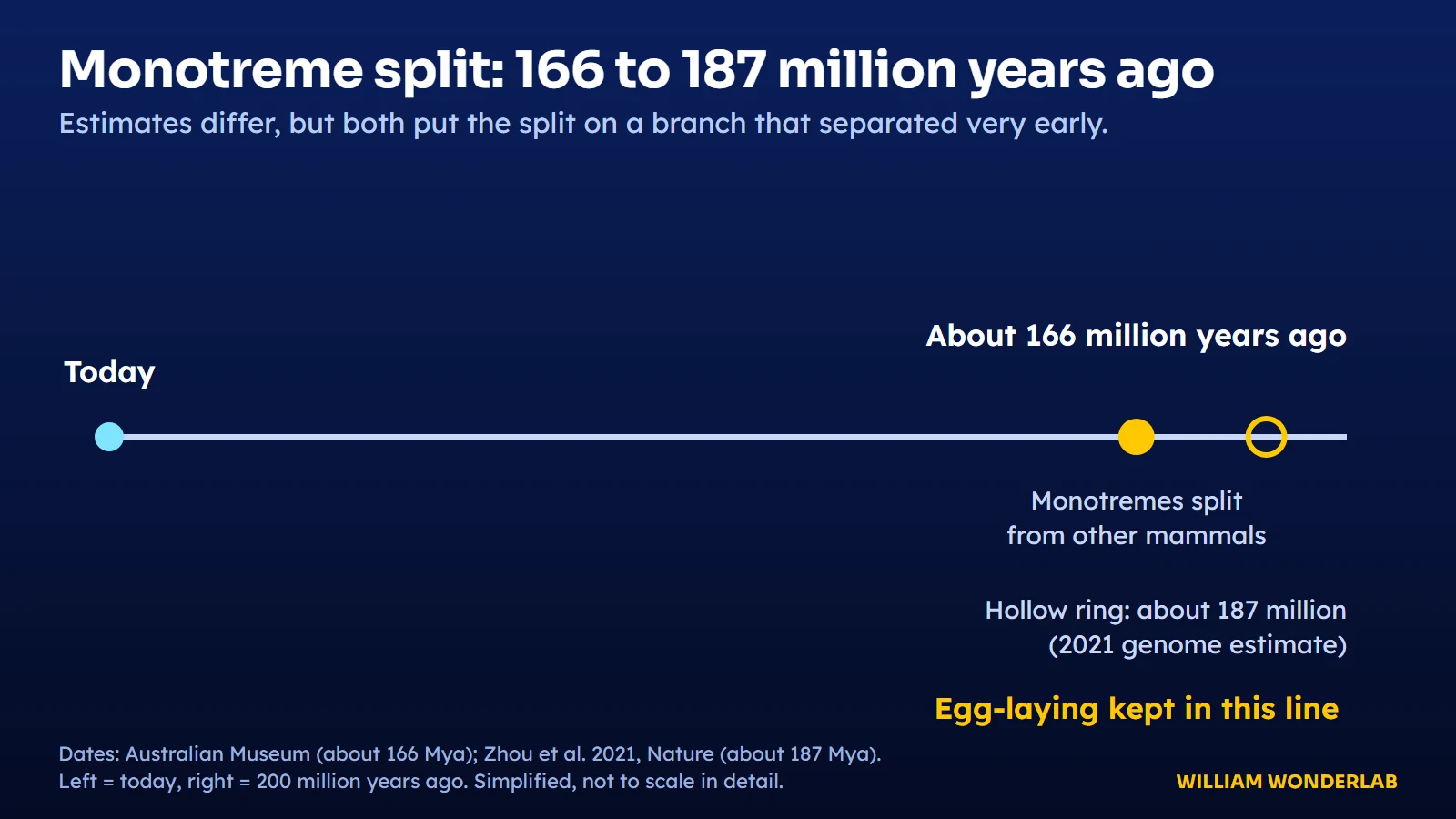
Scientists sort animals into branches on a family tree. The Australian Museum says that “The monotremes diverged from other mammals about 166 million years ago,” and that “today the platypus is one of the most evolutionarily distinct animals on Earth.”[2] “Diverged” means the line split off and went its own way, so its members kept some features that the rest of the mammal branch changed.
Estimates of the date differ. A 2021 genome study in Nature estimated that monotremes diverged from therians (marsupials and placental mammals) “around 187 million years ago.”[3] So the split was somewhere around 166 to 187 million years ago, depending on the estimate.
Egg-laying is one of those features. The Australian Museum calls the soft egg habit “a notable reptilian feature that has been kept in this group of mammals.”[1] Reptiles and birds also lay eggs. The platypus line kept the habit while the rest of the mammal branch moved on to live birth.
What a platypus egg is like
A platypus usually lays a very small clutch. The Australian Platypus Conservancy says that “A clutch of one to three eggs (most often two) is incubated in an underground nesting chamber.”[4] The eggs are “16-18 millimetres long” and have “a whitish shell with a papery or parchment-like texture.”[4]
The shell is softer than many people expect. A 2023 review in National Science Review explains that monotreme eggs look hard and white, but “the eggshell is leathery with only a very thin layer of mineralized calcium carbonate.”[5]
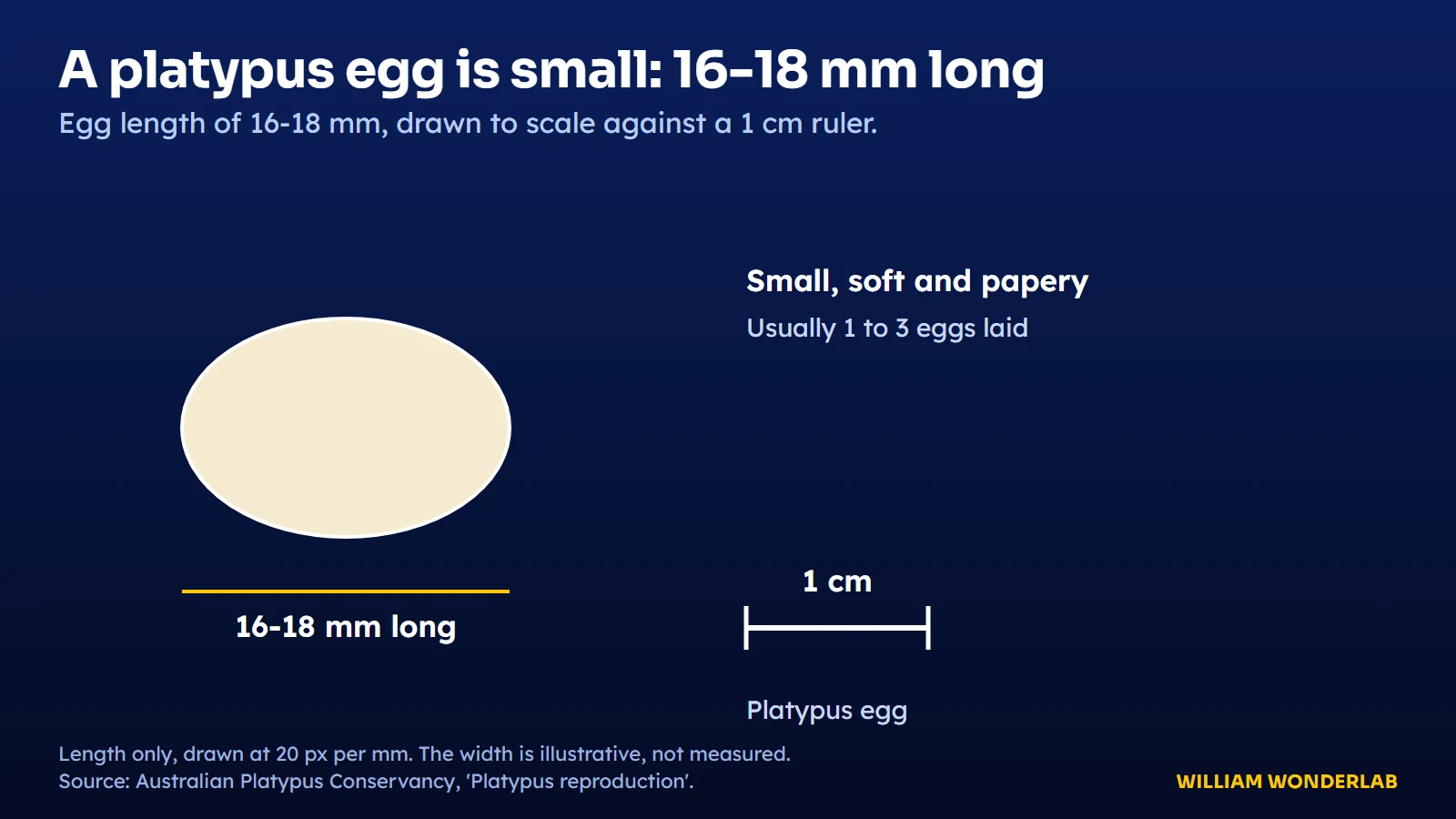
The mother keeps the eggs warm. They are “held between a female’s curled-up tail and her belly to keep them warm.”[4] The nest is an underground chamber in a burrow, which is where the eggs incubate.

After hatching: milk in the burrow
Platypus babies do not leave the nest straight away. The NSW Government says that “The young are suckled in the burrow until about 3 or 4 months of age, after which they first emerge into daylight and the river.”[6] The Australian Platypus Conservancy gives a similar picture, saying the babies “develop in the nesting burrow for approximately 3 months.”[4] The two figures differ slightly, so “about three to four months” is the honest answer.
Did you know? The Australian Museum says that “today the platypus is one of the most evolutionarily distinct animals on Earth.”[2]
A common misconception: “a platypus is a mistake”
Some people think the platypus is an evolutionary mistake, a strange animal that should not exist. The evidence points the other way. Being unusual is not the same as being wrong. The 2021 genome study describes monotremes as “the only extant mammalian outgroup to therians”, meaning they branched off before the marsupial and placental mammal line.[3] The platypus is unusual because its branch separated early, and it has kept features that other mammals no longer use.[1]
Try it: sort the animals
Proposed at-home activity. Use this only as a thinking exercise with a grown-up. You do not need to see a real platypus.
You need: paper, a pencil, and pictures or names of three animals: a chicken, a dog and a platypus.
- Draw two columns labelled “lays eggs” and “gives birth to live young”.
- Using the definition in this article, decide where each animal goes. Remember that the Australian Museum says monotremes are different from other mammals because they lay eggs.[1]
- Write one sentence explaining why the platypus is hard to sort with the other mammals.
- Check your answers with a book or a trusted website.
Safety first: Do not go near, touch or chase wild animals, and never disturb a burrow, nest or riverbank. Stay back from deep or fast water when you are outside, and always go with an adult. Wash your hands after any time outdoors.
Go deeper: an old habit in a young branch
Why keep an old trait?
The Australian Museum does not say why egg-laying has lasted so long in monotremes, so this part is an open question, not a confirmed answer. What is known is that egg-laying is one of the differences that set monotremes apart from other mammals.[1]
Reading the timeline
The timeline is simplified. It marks the split at about 166 million years ago, and it also marks the 2021 genome estimate of about 187 million years.[2][3]
Frequently asked questions
Do all mammals lay eggs?
No. The Australian Museum says monotremes are different from other mammals because they lay eggs. Most mammals give birth to live young.[1]
Are platypus eggs like bird eggs?
Not exactly. Platypus eggs have a soft, papery shell rather than a hard one. A 2023 review describes monotreme eggshells as mostly leathery, and the Australian Museum calls the soft egg habit a reptile-like feature that monotremes kept.[5][1]
How many eggs does a platypus lay?
Usually two. The Australian Platypus Conservancy says one to three eggs, most often two, are incubated in an underground nesting chamber.[4]
How long do baby platypuses stay in the burrow?
About three to four months, during which they are fed in the burrow.[6][4]
When did the monotremes split from other mammals?
Estimates vary. The Australian Museum gives about 166 million years ago,[2] and a 2021 genome study gives about 187 million years ago.[3]
The big idea
An ancient habit, kept by a unique branch. Platypuses lay eggs because they are monotremes, a mammal family that kept an egg-laying trait the rest of the mammals have left behind. Their unusual body is a window into the past.
Related reading
More from William Wonderlab:
Explore more from scientists:
- What is a monotreme? (Australian Museum)
- Platypus evolution (Australian Museum teacher resource)
- Platypus and echidna genomes reveal mammalian biology and evolution (Nature, 2021)
References
[1] Australian Museum, “What is a monotreme?” (accessed 25 October 2026)
[2] Australian Museum, “Platypus evolution” (teacher resource) (accessed 25 October 2026)
[3] Zhou, Y., Shearwin-Whyatt, L., Li, J. et al., “Platypus and echidna genomes reveal mammalian biology and evolution”, Nature 592(7856): 756-762 (2021) (accessed 25 October 2026)
[4] Australian Platypus Conservancy, “Platypus reproduction” (accessed 25 October 2026)
[5] Benton, M. J., “Rethinking the egg”, National Science Review (2023) (accessed 25 October 2026)
[6] NSW Government, “Platypus” (native animal facts) (accessed 25 October 2026)